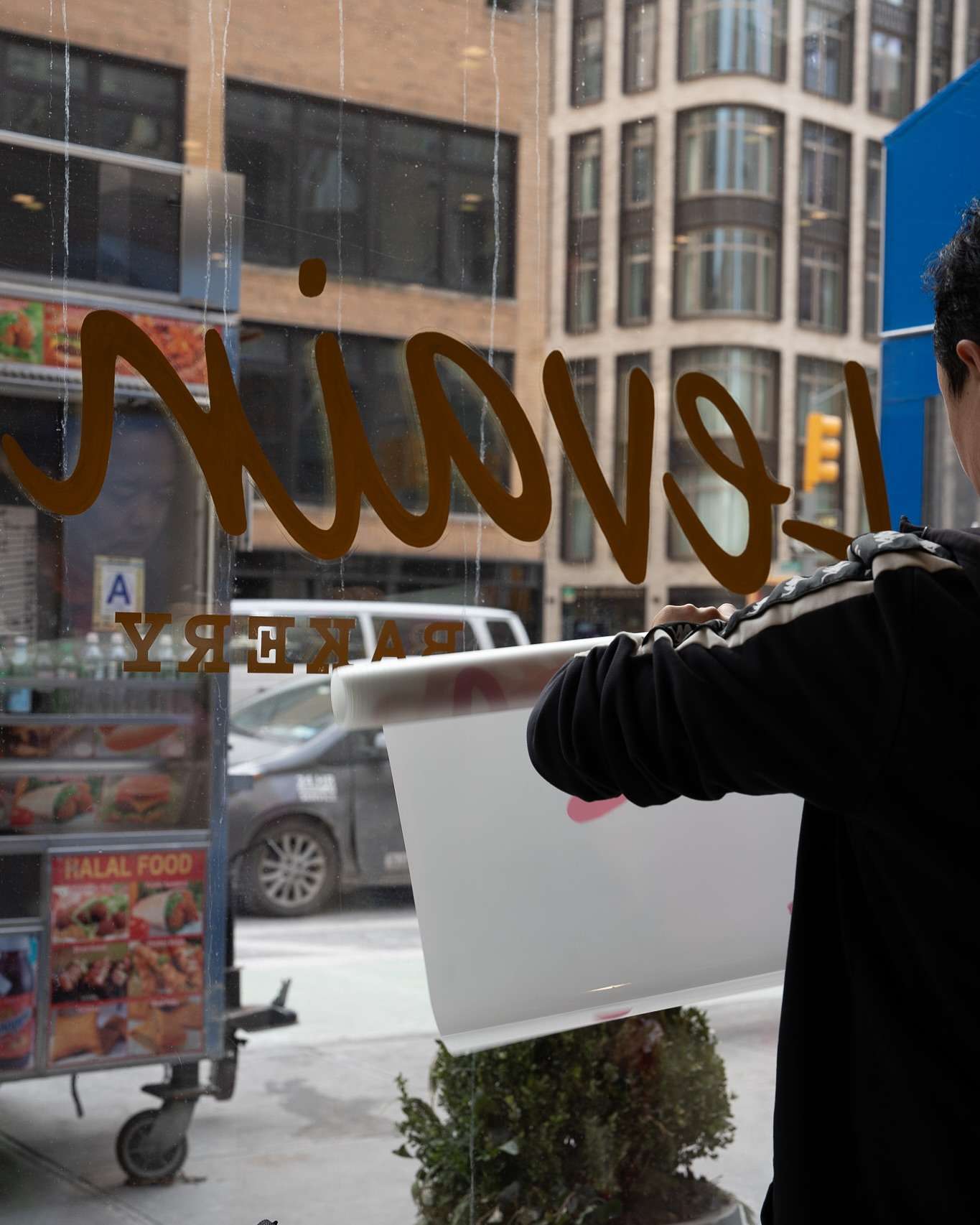
When the business can’t close for us, how we work around active service to get installs done

August 6, 2026
A good deal of the work that we do takes place in rooms where people are eating.
For cafes, bakeries, restaurants, and quick-service counters, shutting down for four hours in the middle of a Tuesday represents a real cost, and the graphics being installed are generally part of a renovation that the owner is looking forward to. It wouldn’t be desirable for the renovation to be the reason why the morning rush had gone elsewhere.
On many of these jobs the usual assumption isn’t “When can we close?” It’s “We’ll be open and will work around you.” Although that problem can be solved, it requires planning rather than working faster.
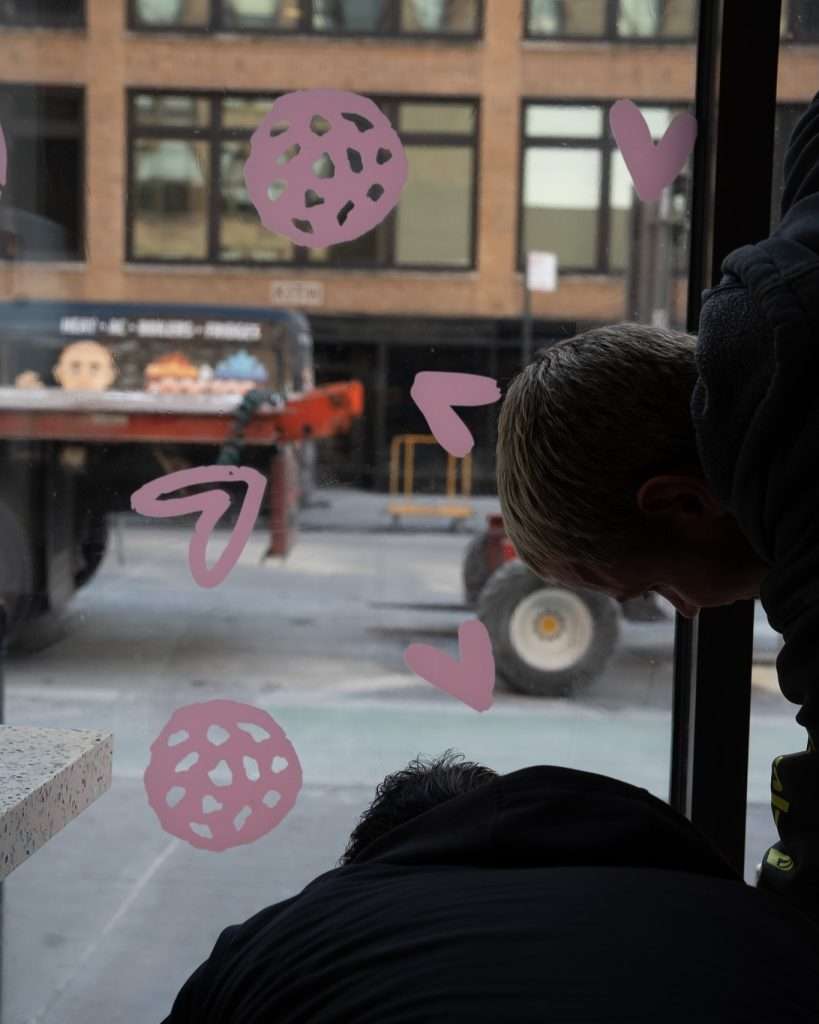
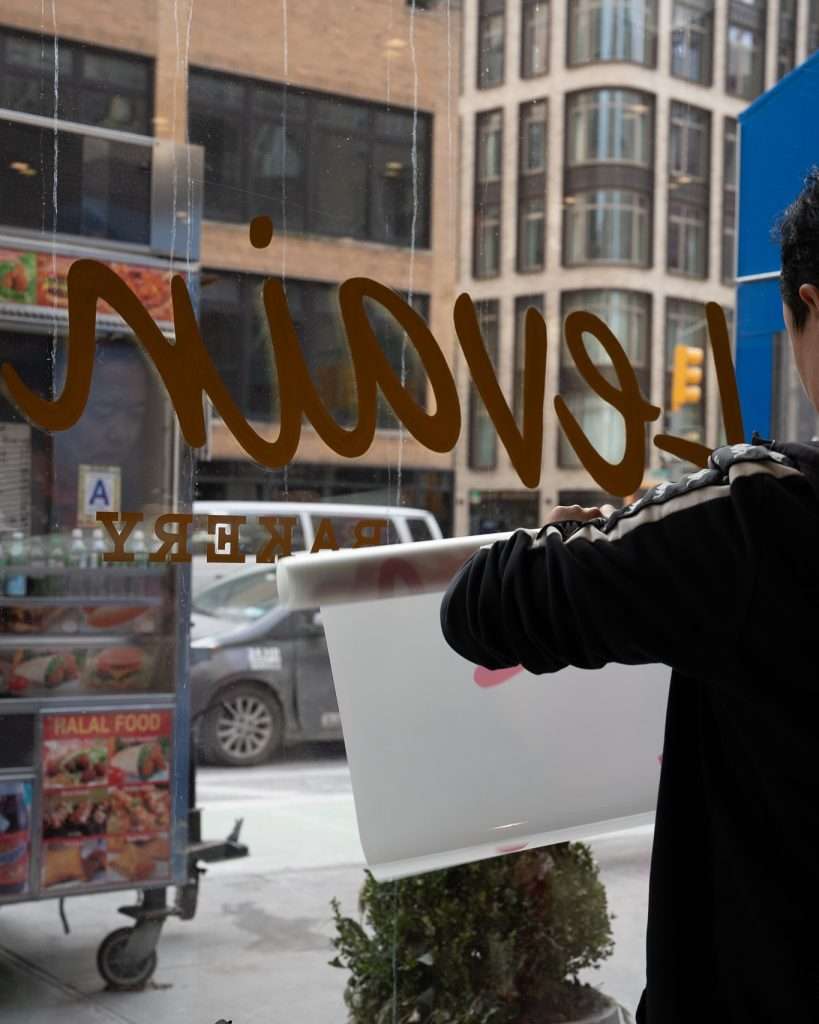
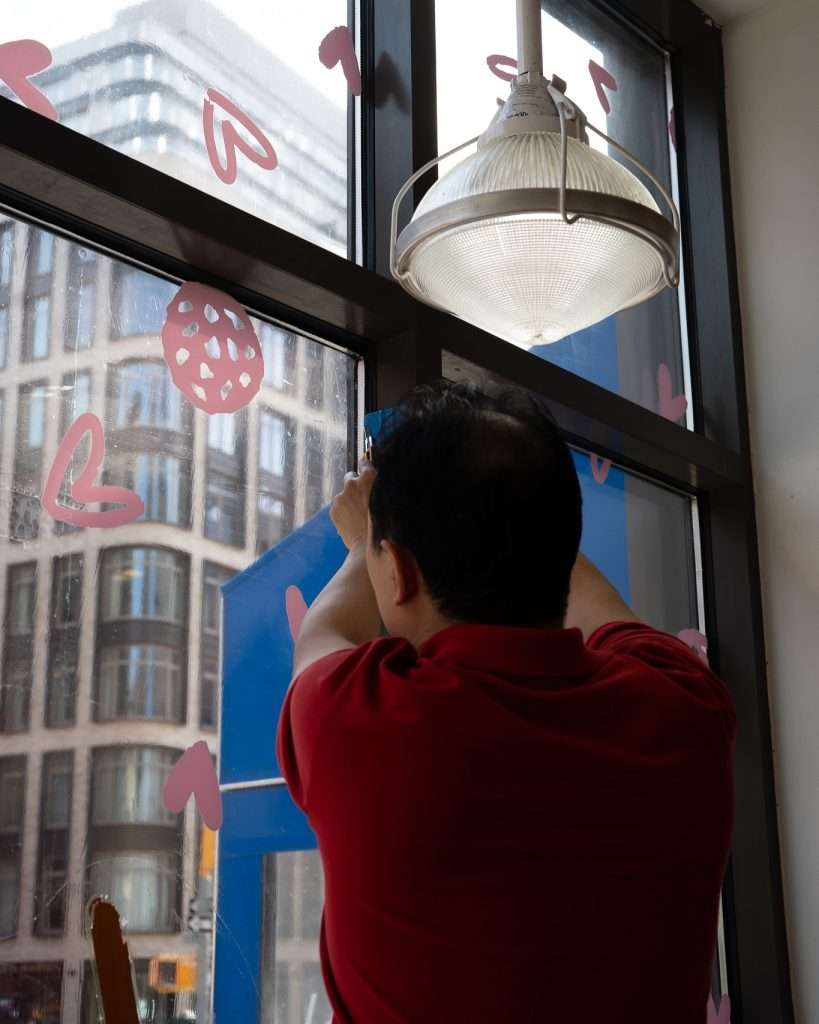
A bakery doesn’t close at 8 am.
The first thing to be determined in a case such as this is the real rhythm of the room, a rhythm which is generally not what the schedule on paper indicates.
The day at a bakery is dominated by the morning hours and is mostly finished by early in the afternoon. A cafe experiences a peak in the morning, followed by a second, smaller one after lunch, and then has a long period that can be used in between. A full-service restaurant has two sharp peaks with a genuine lull between 2 and 4 p.m. A quick-service counter situated next to an office building depends entirely on the ninety-minute lunch period and is almost empty by 3 p.m.
The schedule is constructed around these gaps rather than around a normal working day; as a result, the start time may appear odd on the schedule—for example, a call at 11 am at a bakery is sensible since the busy period has ended and the place is actually quiet, whereas starting at 9 am would place a ladder right in the heart of that business’s busiest hour of the day.
To get it right you should ask the operator rather than making an assumption. The individual at the counter knows exactly when their room becomes empty, generally within a fifteen-minute margin.
The entrance has the smallest window and requires the most preparation.
Door vinyl is the most clear example of the way in which this work is carried out.
The door is the single busiest object in a food business. It’s also the surface with the least tolerance for a partially finished job — a half-applied graphic on a door that two hundred people are going to touch in the next hour isn’t an option.
The door is almost entirely prepared without the door being present; the measurements are checked, the material is cut, the pre-mask work is carried out, the glass is cleaned and prepared in advance, and all the necessary items are arranged and ready. The real application then takes place during a short period between waves of customers, in a single continuous operation, with one crew member in charge of the doorway. As a result, no one walks into wet glass or has to deal with a squeegee.
The same reasoning can be applied to a pickup counter, a register wrap, a menu board, or indeed to anything else which has a queue in front of it. The length of the visible working period is short and the amount of preparation that enables this short period is in fact most of the job.
Working clean in a room with open food
It is the section which distinguishes a food-service installation from a retail one, and it is the section that people tend to undervalue.
In a bakery that is currently operating there are products displayed on the racks and behind the glass. This has concrete implications for what can be done on the job.
Dust and debris are held in place and not picked up later. All sources of particulates are either enclosed, captured at the point of origin, or shifted to a period when the facility is closed. Vinyl offcuts and backing paper are put directly into a bag and not laid on the floor to be picked up later — if a scrap of release liner drifts behind a display case at 11 am, that business has to deal with it at 4 pm.
Chemistry is the main limiting factor; adhesive removers, solvents and those based on citrus have odours which spread, and in a room where people are eating and where the product is absorbing anything in the air, this is no small annoyance. Because some of these products aren’t allowed into an operating food area, the cleaning operations that require them are scheduled for closed hours, period. This does place a real restriction on what can be carried out during service, and it’s better to state this clearly when scheduling rather than find out at 1 p.m.
Blades are kept record of; each blade which enters a food establishment leaves with the staff and is recorded. Nothing is left on a prep surface, on a table, or on a counter — all the tools remain on the staff’s own staging, above the floor and out of the customers’ route.
When using heat guns one has to be aware of the positions of the sprinkler heads and the people. Ladders are not placed in the queue.
The real limitation is the customer path.
In theory the limitation for these jobs is time, but in reality it is floor space and the lines of sight.
The team needed to carry out work on a wall display took up more space than the display itself—this included the materials laid out, the area occupied by the ladder, the staging, and a person who had to be able to step back and look at it. In the case of a narrow cafe, that amount of space made the difference between customers moving through the place normally and them deciding that it wasn’t worth it on this day.
A few things that get worked out before the crew arrives:
The entrance remains clear throughout. It doesn’t just stay clear most of the time; if the work is near the door then someone is looking after it.
The register and the pickup area remain usable; if any work on them is necessary, it is carried out either first or last, not during the course of the service.
Since work is carried out in sections, the room is never being half-disassembled in three places at the same time. One section is opened, completed and then closed down before another one is begun. Although this method is slower than carrying out all the work in parallel, it is the reason why the business is able to keep running.
The menu and the prices remain easy to read; indeed, a covered menu board while the restaurant is operating is a real loss in revenue, and the problem can easily be solved by having a temporary print made if only people had thought about it beforehand.
In New York there is an additional aspect relating to outdoor dining. When a dining area is set up on the sidewalk it takes up the space that a crew would normally use for staging, and we never carry out work on tables that are in use. If exterior work has to be done behind an active dining setup, it will generally be carried out either before the restaurant opens or after it has closed.
The only honest response is overnight.
A lot of this work can be carried out while the service is ongoing. Part of it cannot, and it is more useful to state this at the beginning than to discover it half way through.
Work that goes to closed hAnything related to drilling, anchoring, or the use of mechanical fasteners; dimensional letters and mounted signs cause noise and debris which should not be present in a room that is being used for dining, and no amount of sequencing can overcome this.s that.
The large-scale taking down of old vinyl tends to be slower, more messy, and more reliant on chemical treatments than the application process, especially when the vinyl has been in place for several years.
Anything that requires the entrance to be completely out of action for more than a few minutes.
When a whole window is being replaced the storefront has to be taken down and then reapplied as a single operation.
Do work at height on seating which cannot be cleared.
Since work carried out overnight or before the office opens is more expensive and involves the need for coordination regarding access to the building, it is advisable to identify such items early on—during the survey rather than wait until the week of the installation. If an operator is aware in advance that one of the items in the package involves a call at 5 a.m., then he or she can make the necessary arrangements; but if the operator only finds out on the day of installation, then there will be a problem.
What makes these jobs go smoothly
Three things, consistently.
There’s just one point of contact—a manager or owner who is able to decide on the spot, rather than having the crew ask four different staff members if a display case can be moved.
A straightforward look at the room’s schedule, including the delivery time. It is especially true of bakeries that they make deliveries early, and the back door becomes busy at times which surprise people.
We should give advance notice of anything that the crew are unable to move themselves. This includes fixed seating, display cases, equipment, and all other items that are secured in place. If movement is required, then that will be discussed during the survey.
A few things people usually ask us
Actually, can we carry out the installation while the shop is open? In the case of most window graphics, wall graphics, door vinyl and interior uses — yes, provided that the work is scheduled during your slower times. However, for drilling, mounted letters, large removals or any job which involves closing the entrance, the answer is no. Before the date is finalised, we will let you know which category each item on your job belongs to.
For how long will the busiest part of the site remain unavailable? If the preparatory work has already been carried out, the noticeable period of work on a door or counter is short—indeed, that is exactly why the preparation is done in advance. The total time taken is the same as the time required, but the work proceeds in sections, so that no one area is left without service for the whole duration.
Will it have a smell? During operation we handle products which do not. Any item that needs solvents or strong adhesive removers is arranged to be dealt with outside of operating hours, since in a room where food is being served it wouldn’t be reasonable to make such a compromise.
Does working over night tend to cost more? Yes, and there are times when it is the only right choice. The way to prevent having to pay for overtime throughout the entire project is to decide at the beginning which sections of the job require it.
Bottom line
Most of the time dealing with an operating business is a question of planning; the room has a certain rhythm, the preparation takes place before the staff get in the way, the work is carried out in different areas, and the few tasks which actually can’t be carried out during service are given a name at the beginning rather than being spotted late.
The distinction lies between a refresh that a business is pleased it carried out and one that cost it a whole morning.
If you have a location that can’t close, Bullseye USA will provide nationwide installation, adjust its service hours to suit yours, and honestly advise you on which sections of the schedule need to include closed-hours slots. Just get in touch with us and we’ll create the schedule to fit your room.